Ceramic or Quartz Worktops: Which Suits You?
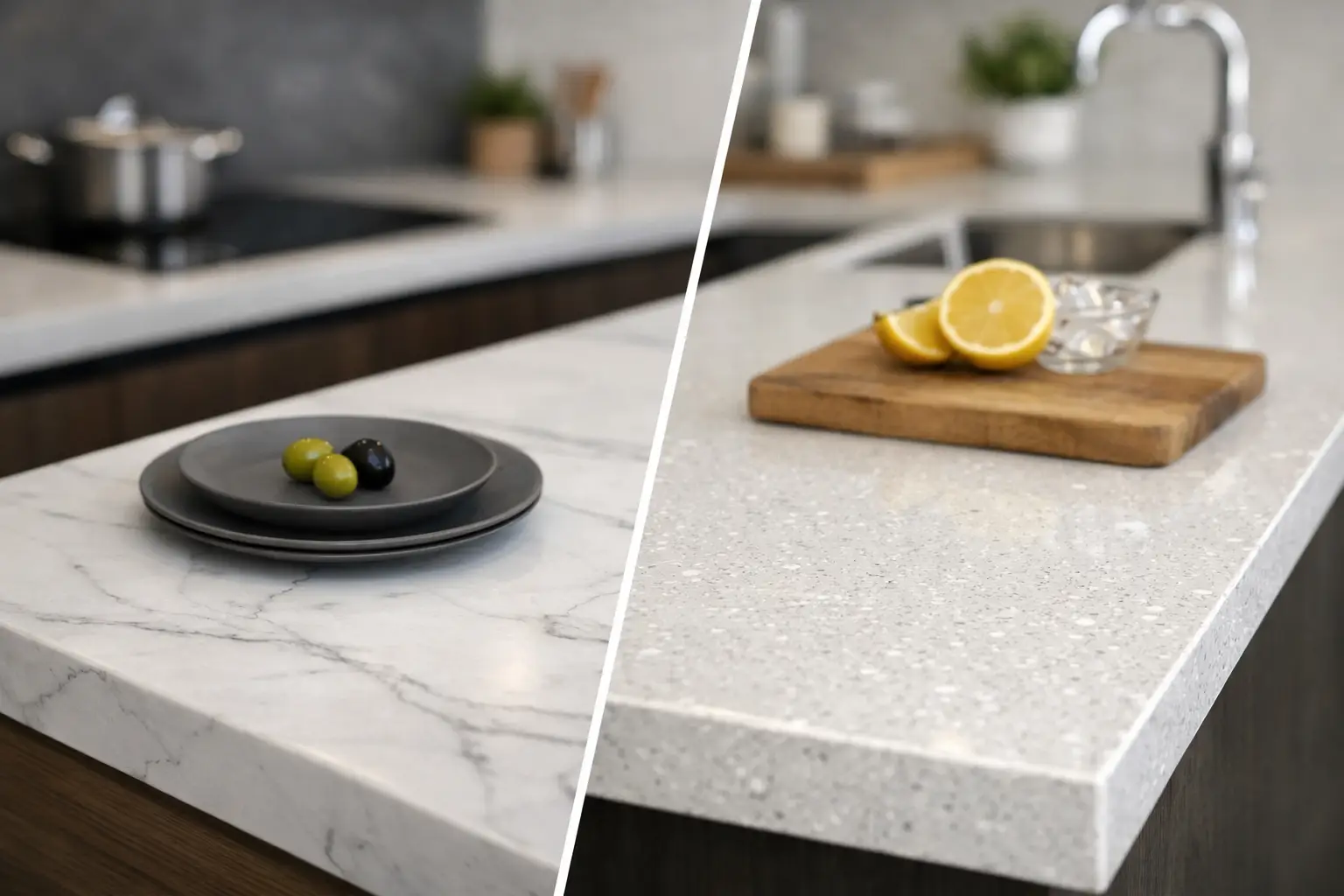
If your kitchen units still do the job but the surfaces have seen better days, the worktop is often the feature that changes the room fastest. For many homeowners weighing up ceramic or quartz worktops, the choice comes down to daily life rather than showroom labels. A busy family kitchen, a keen cook’s workspace and a lower-maintenance room for everyday use can all point in slightly different directions.
When you are refreshing an existing kitchen rather than starting from scratch, that decision matters even more. The right worktop needs to look good with your new doors and drawer fronts, but it also has to suit the way you use the room. That is why ceramic and quartz are both popular – they offer a smart, modern finish without forcing you into a full kitchen replacement.
Ceramic or quartz worktops – the main difference
At first glance, ceramic and quartz can look surprisingly similar. Both are available in a wide range of colours, both can give a clean, contemporary finish and both can work well in a kitchen makeover. The real differences show up in how they are made and how they behave over time.
Quartz worktops are engineered surfaces, made from natural quartz combined with resin and pigments. That gives them a consistent appearance and a solid, weighty feel. They are popular because they are hard-wearing, easy to live with and available in styles that range from plain, understated tones to designs that resemble natural stone.
Ceramic worktops are made from natural materials fired at very high temperatures. The result is a dense, hard surface that copes particularly well with heat, sunlight and day-to-day wear. Ceramic often appeals to homeowners who want a more architectural look, especially in thinner profiles or matt finishes.
Neither is simply better in every case. The right choice depends on what matters most in your kitchen.
How they perform in everyday use
A worktop can look perfect in a sample, then feel less practical once real life gets involved. That is why performance matters just as much as appearance.
Heat resistance
Ceramic has a clear advantage when it comes to heat. Hot pans are less of a worry on a ceramic surface because the material is designed to cope with very high temperatures. For keen cooks, that can be a real selling point.
Quartz is still durable, but it is not as heat-resistant as ceramic because of the resin content. In normal use, it performs very well, but putting a very hot pan directly onto the surface is not usually recommended. A simple trivet solves the problem, but it is worth knowing if your kitchen tends to be busy and fast-moving.
Scratch resistance
Ceramic is highly scratch-resistant, which makes it appealing in households where the kitchen gets heavy use. It stands up well to the knocks and habits that come with daily cooking, children doing homework at the worktop and all the rest of ordinary life.
Quartz is also tough and reliable, but it can be a little more vulnerable to marks from sharp items if treated carelessly. In practice, both materials are strong choices, but ceramic has the edge if maximum scratch resistance is high on your list.
Stain resistance and cleaning
Both surfaces are easier to care for than many traditional worktop materials. Quartz is non-porous, so it resists staining well and is straightforward to wipe clean. That makes it especially attractive for busy households that want a practical finish without a lot of upkeep.
Ceramic is also very easy to maintain and resists stains well. Spills from coffee, oil, tomato sauce and similar kitchen staples are usually not a problem if cleaned as normal. For most homeowners, there is very little between them on everyday cleaning.
Style matters as much as strength
A kitchen refresh is not just about replacing worn surfaces. It is about making the room feel current, brighter or more suited to your taste without changing the whole layout.
Quartz worktops often suit homeowners who want warmth and consistency. Because the material is engineered, colours and patterns tend to be more controlled and even. If you are pairing a new worktop with replacement doors, this can make it easier to create a balanced look. Soft whites, light greys and marble-effect quartz designs remain popular because they lift older kitchens without making them feel stark.
Ceramic tends to appeal when you want a sharper, more contemporary finish. It is particularly effective in modern matt kitchens, handleless styles or schemes built around texture and contrast. Some ceramic designs have a stone-like look, while others feel more understated and minimalist.
The important point is scale. A small sample can help with colour, but larger displays make it much easier to picture how a surface will work with door colours, cabinet edges and wall tones. That is one reason a showroom visit is useful when comparing ceramic or quartz worktops. You can see how the finish behaves in proper light and whether it feels right with the kitchen you already have.
Weight, fitting and existing kitchen units
When you are replacing worktops in an existing kitchen, practical fitting questions matter. Not every makeover starts with brand-new cabinets underneath, so the condition and structure of your current units need to be considered.
Quartz is a substantial material and has a solid, premium feel, but that weight needs proper support. Ceramic can also be a premium option, yet depending on the product and thickness, it may offer a different balance of strength and profile. The detail that matters most is not just the slab itself, but whether your existing kitchen can take the chosen material comfortably and safely.
This is where general online advice only gets you so far. A worktop that looks ideal on screen may not be the most suitable choice for your current kitchen setup. Seeing samples and discussing your existing units with someone who understands kitchen makeovers can save a lot of second-guessing.
Cost and long-term value
For most homeowners, budget is part of the decision, but not always in the most obvious way. The cheapest quote is not automatically the best value if the surface does not suit how you use the kitchen.
Quartz is often seen as the dependable middle ground between appearance, durability and upkeep. It gives a high-quality look, a broad choice of finishes and reliable day-to-day performance. For many kitchen refresh projects, it feels like the safe and sensible option.
Ceramic can sit at a similar level or higher depending on the range, finish and installation details. Its extra heat resistance and scratch resistance can make it worth the spend for households that cook a lot or want a more design-led result.
The better question is not just what it costs now, but whether it will still feel right in five or ten years. If you want a surface that blends easily with a wide choice of replacement doors and colours, quartz may give you more flexibility. If you are aiming for a crisp, modern update with excellent technical performance, ceramic may be the stronger choice.
Which should you choose?
If your priority is a practical, attractive worktop with lots of colour choice and easy day-to-day care, quartz is often the easier all-round answer. It suits many family kitchens and works especially well when you want to refresh tired units with new doors, handles and a surface that instantly smartens the whole room.
If your priority is heat resistance, scratch resistance and a distinctly modern finish, ceramic is hard to ignore. It can be an excellent fit for keen cooks or for homeowners who want their kitchen makeover to feel cleaner, sharper and more contemporary.
There are also cases where the decision comes down to the details around the worktop rather than the worktop itself. Door colour, splashback choice, edge profile, sink style and how much natural light the kitchen gets can all influence which material feels better in the room.
Seeing ceramic or quartz worktops in person
Photos are useful for ideas, but they rarely show texture, tone and finish accurately enough to make a confident decision. Two white worktops can look almost identical online and completely different in person. The same goes for grey stone effects, matt finishes and subtle veining.
For homeowners around St Neots, Little Paxton, Huntingdon and nearby areas, visiting a showroom can make the decision much simpler. Looking at ceramic and quartz samples alongside replacement doors, handles and other finishing touches helps you judge the kitchen as a whole rather than choosing each element in isolation.
At Replacement Kitchen Doors To Size, that is often where the best choices get made – not through pressure, but through comparison, practical advice and seeing what genuinely works with the kitchen you already have.
A worktop should do more than look impressive on day one. It should suit your habits, your home and the refresh you are trying to achieve, so take the time to compare both materials properly before you decide.