What Is Bespoke Kitchen Design?
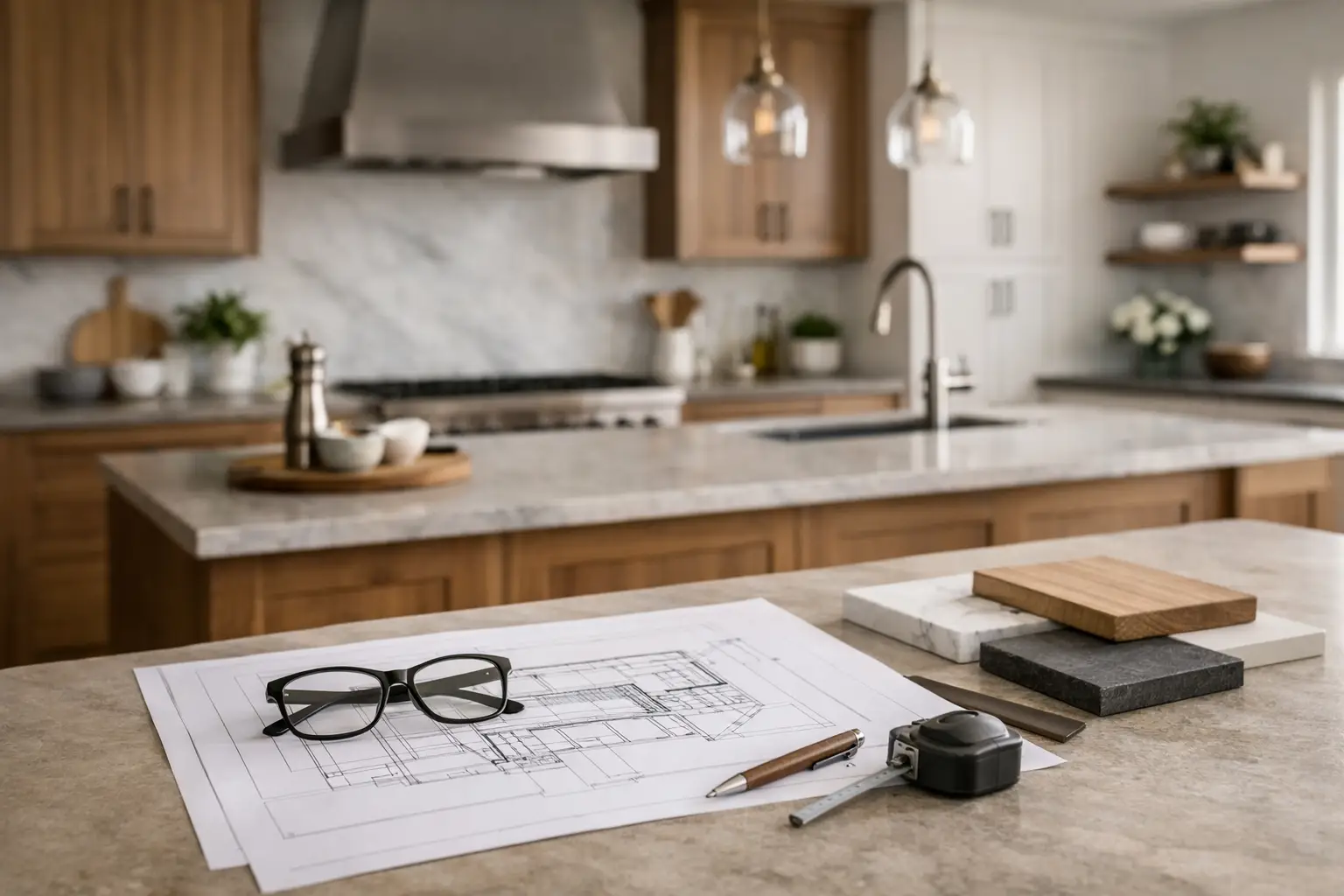
A kitchen can look impressive in a brochure and still be awkward to live with. Doors clash when opened, pans end up in the wrong cupboard, and the one spot where everyone wants to stand is exactly where the dishwasher drops open. That is usually where the question comes from: what is bespoke kitchen design, and is it actually different from simply choosing nicer units?
In straightforward terms, bespoke kitchen design means planning a kitchen around your home, your routine and the way you use the space every day. Rather than starting with a fixed layout and asking you to adapt to it, the design starts with how your household lives. That could mean making better use of a narrow room, building in more practical storage, choosing materials that suit family life, or creating a cleaner layout that makes cooking and moving around easier.
What is bespoke kitchen design in practice?
A bespoke kitchen is not just a kitchen with expensive finishes or unusual colours. The real difference is in the thinking behind it. Measurements, workflow, storage needs, appliance choices and visual style are all considered together, so the final kitchen feels coherent and practical rather than pieced together.
In practice, this often includes tailored cabinet sizes, storage planned around specific items, worktop space where it is genuinely needed, and a layout shaped around the room rather than forced into standard dimensions. If you cook every evening, your priorities will be different from someone who wants a social kitchen centred around entertaining. If you are updating a period property, the room may have awkward walls, alcoves or ceiling lines that need a more considered approach than an off-the-shelf plan can offer.
That is why bespoke design is as much about problem-solving as appearance. A well-designed kitchen should make everyday tasks feel simpler. It should also suit the property, rather than looking like it has been dropped in from somewhere else.
The difference between bespoke and standard kitchens
Standard kitchens usually rely on set cabinet ranges and more limited layout options. There is nothing inherently wrong with that. For some homes and some budgets, a standard kitchen can work perfectly well. But it generally means choosing from predetermined unit widths, fixed storage options and a narrower set of design decisions.
Bespoke kitchen design gives you more control. That does not always mean every single element is handmade from scratch. In many modern projects, it means using high-quality kitchen ranges and then tailoring the design, specification and installation so the result is right for the property and the people using it. That is often the most sensible balance between flexibility, durability and cost.
The difference is easiest to spot in awkward or hardworking spaces. A standard plan may leave unusable gaps, overcrowded walkways or cupboards that technically fit but do not help much in daily use. A bespoke approach looks at those friction points and resolves them properly.
Why homeowners choose bespoke kitchen design
Most people do not ask for a bespoke kitchen because they want something complicated. They want one because they are tired of making do.
Sometimes the issue is storage. The room may have enough cupboards on paper, but not enough useful cupboards. Deep corner units become dead space, tall cabinets dominate the room, or everyday items end up on the worktop because there is nowhere sensible to keep them. A bespoke design can address this by planning storage around real habits rather than broad assumptions.
In other homes, the problem is flow. Perhaps the fridge is too far from the prep area, the hob is cramped into a corner, or there is no clear place for family members to gather without getting in the way. A better layout can make the room feel larger and calmer without extending it.
Style matters too, of course. Homeowners often want a kitchen that feels more considered and more in keeping with the rest of the house. Bespoke design helps because colours, finishes, handles, worktops and appliances are selected as part of one joined-up plan rather than as separate purchases.
What a bespoke design process usually includes
A proper bespoke kitchen design process begins with questions, not catalogues. Before discussing finishes, a designer should understand how the room is used, what is not working now and what matters most in the finished result.
That conversation usually covers practical details such as cooking habits, storage frustrations, appliance preferences, who uses the kitchen most, and whether the room needs to serve multiple purposes. In many family homes around St Neots, Huntingdon and the surrounding area, the kitchen is not just for cooking. It can also be where homework happens, where people gather at the end of the day, and where household life is organised.
After that comes measured planning. Room dimensions, windows, doorways, plumbing positions and structural quirks all affect what is realistic. This is where experience matters. Good design is not about squeezing in every possible feature. It is about balancing storage, movement, light and usability.
Then the specification is built out. Cabinets, internal storage, worktops, sinks, taps, appliances and finishes all need to work together. A quartz worktop may be ideal for one household because it is durable and easy to maintain. In another kitchen, the priority may be achieving a streamlined handleless look without compromising accessibility or storage.
Finally, installation has to match the design. Even the best plan can be let down by poor fitting. Bespoke design only really delivers its value when the details are carried through properly on site.
What is bespoke kitchen design worth paying for?
That depends on the room, your priorities and how long you plan to stay in the property. For some homeowners, the value is obvious because the existing kitchen is genuinely difficult to use. In those cases, better layout and storage can improve daily life straight away.
For others, the benefit is more about making sure a significant investment is spent wisely. Kitchens are not changed every year. If you are replacing one, it makes sense to think carefully about how the finished space will perform over time. Bespoke design helps reduce the risk of expensive compromises, such as too little worktop space, poor appliance placement or storage that looks good initially but proves frustrating after a few months.
There are trade-offs, of course. A more tailored design process can take longer than choosing a standard package, and costs may be higher depending on the level of customisation and specification. But a bespoke approach does not have to mean extravagant. Often it means spending more carefully, putting the budget where it has the biggest impact on function and longevity.
When bespoke makes the biggest difference
Some kitchens benefit from bespoke design more than others. Older properties with uneven walls or unusual room shapes are an obvious example. So are compact kitchens where every centimetre matters. In smaller spaces, thoughtful planning can make the difference between a room that feels cramped and one that works surprisingly well.
It is also especially valuable in open-plan layouts. When the kitchen is visible from living and dining areas, it needs to do more than function. It has to sit comfortably within the wider space. That often means paying closer attention to proportions, finishes, storage concealment and the way appliances are integrated.
Households with specific needs also tend to benefit more from a tailored design. That might include keen cooks who need a more efficient working layout, families who require tougher materials and better organisation, or homeowners planning for easier accessibility.
How to tell if a design is genuinely bespoke
The word bespoke is used quite loosely in the kitchen industry, so it is worth looking past the label. A genuinely bespoke service should feel personal from the start. The design should respond to your room and your routine, not just steer you towards a pre-set range with minimal adjustments.
A good sign is when the conversation focuses on how you live. Where do groceries pile up when you come in? Do you need more drawer storage than cupboards? Would an island improve the room, or simply interrupt movement? Those are the kinds of questions that lead to a better result.
It should also be clear how decisions are being made. If a designer recommends a particular cabinet style, worktop or layout, there should be a practical reason behind it. Honest guidance matters here. Sometimes the right answer is not the most expensive option, but the one that will wear well and suit the space for years.
For many local homeowners, that is where working with a specialist such as The Kitchen Magician can feel very different from buying through a national chain. The process is typically more hands-on, more accountable and more grounded in what will actually work in the home.
A kitchen that fits real life
The best way to think about bespoke kitchen design is this: it is not about making a kitchen more complicated, but making it more appropriate. Appropriate for the room, for the property, for the people using it, and for the rhythm of everyday life.
A well-designed bespoke kitchen should not feel like a showroom set. It should feel easy to use on a busy weekday morning, practical when the shopping comes in, and comfortable when friends or family gather round. If a kitchen can do all of that while still looking the part, you are not just paying for furniture. You are paying for a space that has been properly thought through.