How to Design a Family Kitchen That Works
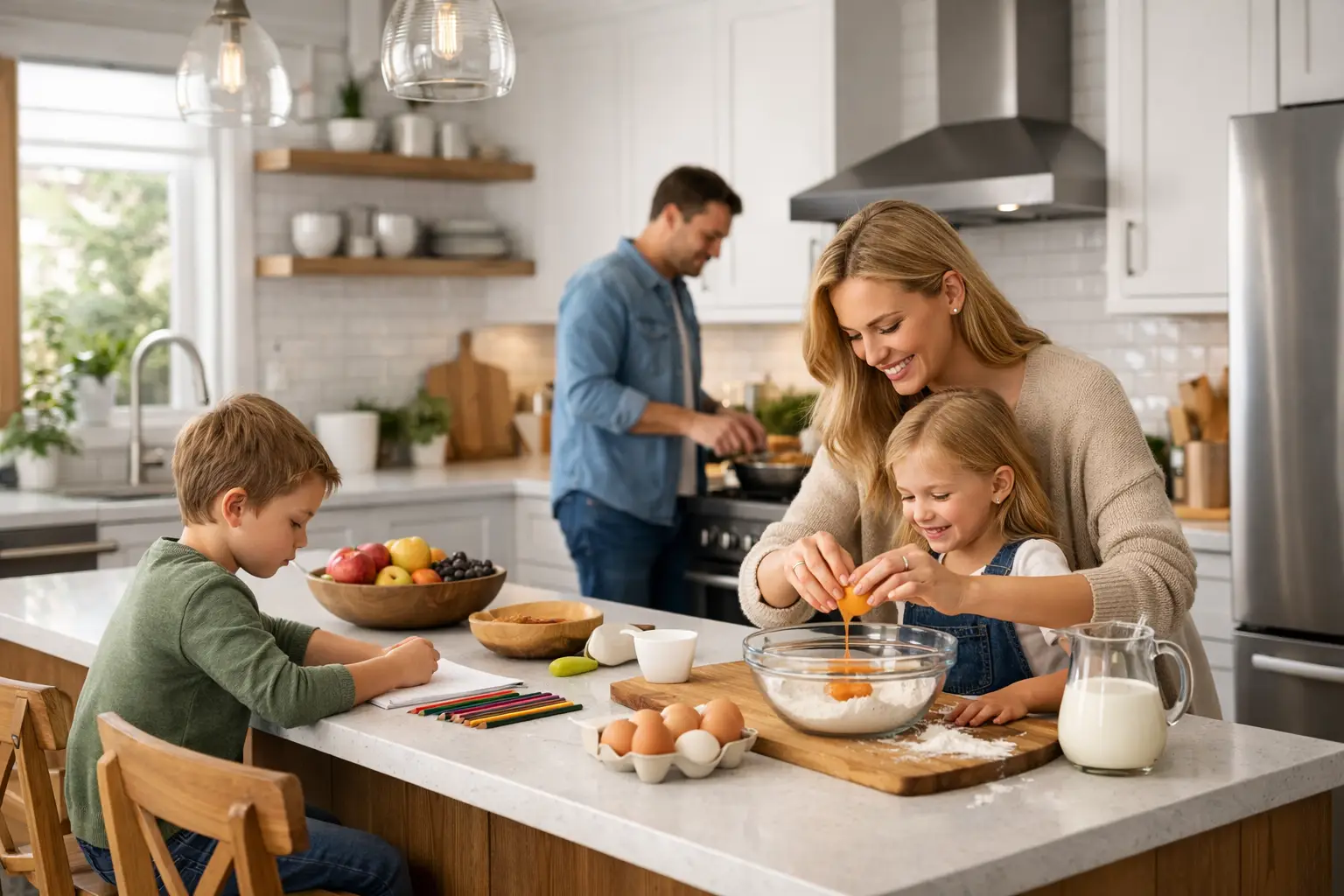
Breakfast rush tells you more about a kitchen than any brochure ever will. If two people cannot make toast while someone else fills a water bottle and a child hunts for cereal, the problem is rarely the room itself. More often, it is a question of how to design family kitchen spaces so they cope better with everyday life.
For most households, a family kitchen has to do several jobs at once. It is where meals are made, homework appears, bags are dropped, post piles up and someone always seems to be looking for chargers, lunch boxes or the good scissors. That is why good design is less about chasing a fashionable look and more about making the kitchen you already have work harder, feel calmer and stay easier to use.
How to design a family kitchen around real routines
The best starting point is not colour or door style. It is routine. Think about what happens in your kitchen on an ordinary weekday, not on Christmas Day or when friends come round. Who uses the room first thing, where bottlenecks happen, which cupboard is always in the way and what ends up living on the worktop because there is nowhere sensible to put it.
This matters because family kitchens succeed when they reduce friction. If breakfast items are spread across three areas, mornings will feel more chaotic than they need to. If the dishwasher door blocks the main route to the garden, someone will always be squeezing past it. If bins are too far from the prep area, waste gathers on the side instead.
A practical kitchen design often comes from small layout decisions rather than wholesale change. Many homeowners already have a workable cabinet arrangement and simply need to improve how it functions. That could mean replacing tired doors, adding better drawer storage, updating handles for easier grip or choosing a more practical worktop and sink setup.
Start with movement, not decoration
Before choosing finishes, look at how people move through the space. In a busy household, clear walkways matter just as much as storage. There should be enough room to open the oven, unload shopping and pass through without everyone colliding.
If your current layout basically works, keep it. That is often the most sensible route. A full redesign is not always necessary when replacement doors, new drawer fronts and a few carefully chosen updates can make the room feel far more usable. Keeping the footprint can also help you spend money where it has more impact, such as better storage, tougher surfaces or upgraded appliances.
Where layout changes are worth considering, they are usually the ones that solve a recurring annoyance. That might be moving a tall fridge so it does not dominate the entrance, improving access to a corner cupboard or changing a sink and drainer arrangement to free up prep space. The right answer depends on the shape of the room and how your household actually uses it.
Create zones that make sense
Family kitchens work best when similar tasks are grouped together. Try to think in zones rather than individual units. Food prep, cooking, washing up, breakfast items and school-day essentials all need a home.
For example, storing cereal, mugs, lunch boxes and water bottles near one stretch of worktop can create a simple breakfast station. Keeping pans, utensils and oils close to the hob saves constant back and forth. Putting recycling and general waste near the main prep area makes everyday cooking tidier and faster.
This does not have to mean a large kitchen with endless cupboards. Even in a compact room, sensible grouping makes a noticeable difference.
Storage should support family life
Most people do not actually need more cupboards. They need better ones. Deep shelves can swallow items at the back, while awkward corner units often become a graveyard for cake tins and plastic containers with no lids.
Drawers are often more useful than standard base cupboards in a family kitchen because they bring everything into view. Pans, food containers and even dry goods are easier to find when you can see the full contents at once. For wall units, keep daily-use items at a comfortable height and reserve higher shelves for occasional pieces.
Think about what children need to reach safely as well. If snacks, cups or plates for younger family members can be stored lower down, you may reduce both mess and constant requests for help. At the same time, cleaning products, sharp tools and anything breakable should be kept well out of the way.
A family kitchen also benefits from one or two flexible storage areas. That could be a drawer for school letters and pens, a cupboard for pet food, or a charging point tucked inside a unit rather than spreading cables across the worktop. These little details are often what make the room feel properly thought through.
Choose surfaces that can take everyday wear
A family kitchen needs to stand up to real life. That means crumbs, spills, hot pans, dropped cutlery and the occasional art project on the wrong surface. Durable finishes matter more here than delicate ones that always need protecting.
Worktops should be chosen with maintenance in mind. A surface that looks beautiful but shows every mark may not suit a household that uses the kitchen from early morning until late evening. Likewise, highly reflective finishes can look smart, but they can also show fingerprints more clearly.
Door finishes are a similar balancing act. Matt styles can give a softer, more modern feel, while gloss can help bounce light around a smaller room. Neither is automatically better. It depends on the amount of natural light, the age of the property and how much day-to-day wiping you are willing to do.
This is where seeing samples in person helps. Colours and textures behave differently in real homes than they do in online photos. Homeowners around St Neots often find that comparing door styles, worktop samples and handles side by side makes decisions much easier, especially when trying to update an existing kitchen rather than start from scratch.
Lighting has to work for more than one job
Family kitchens often suffer from lighting that is either too harsh or not useful in the places that matter. A single central fitting rarely gives enough practical light for prep areas, sinks and hobs.
Good kitchen lighting usually comes from layers. General lighting helps the room feel bright overall, while task lighting makes worktops safer and easier to use. If the kitchen also doubles as a dining or homework area, softer lighting can help it feel less clinical in the evening.
Natural light matters too. If you are refreshing doors and worktops, lighter finishes can help a dim kitchen feel more open. That does not mean everything has to be white. Warm neutrals, soft greys and wood-effect tones can all brighten the room while still feeling practical and lived-in.
Seating, homework and everything in between
Many family kitchens are no longer just kitchens. They are where children sit with homework, where people work from a laptop for half an hour, and where neighbours end up having tea. So seating needs a bit of thought.
If you have room for a table, make sure there is still enough circulation space around it. If not, a breakfast bar or overhanging worktop may offer a useful perch without crowding the room. The key is to avoid creating a sitting area that interrupts cooking and clearing up.
It is also worth deciding how much multi-use living you really want in the kitchen. Some households like everything happening in one space. Others prefer to keep study, toys and paperwork slightly separate. There is no right answer, but being honest about it will help you design a room that feels better day to day.
A fresh look without replacing everything
One of the biggest misconceptions about kitchen design is that improving function always means ripping the whole room out. In many cases, that simply is not true. If your cabinets are sound and the layout broadly works, replacing doors, drawer fronts, handles, worktops, sinks, taps and appliances can transform both the appearance and the usability of the space.
This approach often makes sense for family homes because it is more practical, less disruptive and easier to tailor. You can focus on what really needs attention rather than paying to replace units that are still doing their job. It also lets you keep familiar layout choices that already suit the way your household moves around the room.
At Replacement Kitchen Doors To Size, that is often where conversations begin – not with tearing everything out, but with looking at what can be improved sensibly.
How to design family kitchen updates with the future in mind
A kitchen that works now should still work in a few years. Children grow, routines change and what feels convenient today may become awkward later on. So when planning updates, try to think slightly ahead.
That might mean choosing drawers that are easier on the back than low cupboards, handles that are comfortable for all ages, or appliances with simpler cleaning and better energy efficiency. It may also mean avoiding very trend-led choices if you want the kitchen to feel current for longer.
A family kitchen does not need to be perfect. It needs to be forgiving. It should cope with busy mornings, quick lunches, rushed evenings and the odd bit of chaos without feeling as though the whole room is working against you.
If you are wondering how to design a family kitchen, start with the life already happening in it. Notice what slows you down, what annoys you and what you wish was easier. Often the best answer is not a brand-new kitchen, but a smarter version of the one you already have – refreshed in the right places, with practical choices that make every day run more smoothly.
A good family kitchen should feel easier to live with by Monday morning, not just better to look at on the day it is finished.