A Guide to Kitchen Storage Planning
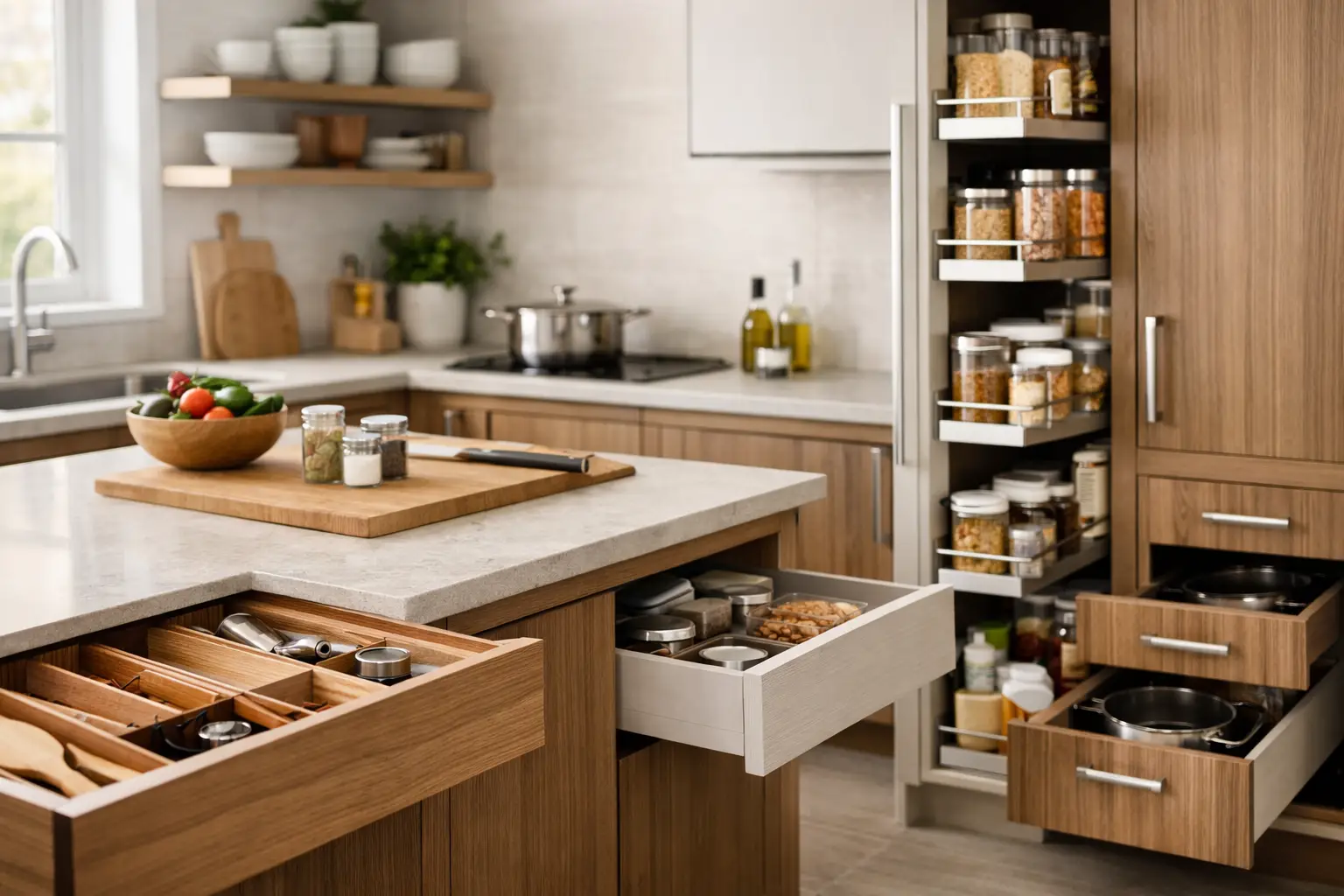
The problem with kitchen storage is rarely just space. More often, it is the wrong space in the wrong place. A tall cupboard that swallows baking trays but leaves pans piled on top of each other, or a run of cabinets that looks tidy from the outside yet makes everyday cooking harder than it should be. That is why a good guide to kitchen storage planning starts with how you actually use your kitchen, not just how many units you can fit in.
If you already like your kitchen layout, that is often a very good place to begin. Many homeowners do not need a complete refit to get a more practical room. Sometimes better storage planning, paired with replacement doors, drawer fronts, new handles or a refreshed worktop, is enough to make the whole kitchen feel easier to live with.
Why kitchen storage planning often goes wrong
A kitchen can have plenty of cupboards and still feel cluttered. The issue is usually that storage has grown in a piecemeal way. One cupboard becomes the baking cupboard, another gets filled with small appliances, and a drawer ends up holding everything from batteries to takeaway menus. Over time, the room stops supporting the way you cook, clean and organise daily life.
That is why storage planning needs to be practical before it is decorative. Deep cupboards look generous, but they can be awkward if you are constantly bending and reaching. Open shelving can look light and attractive, but it tends to suit people who are happy to keep everything neat. Large pan drawers are excellent for many households, though they may reduce space for taller items if the rest of the layout is fixed. There is no single right answer – it depends on what you use, how often you use it, and who is using the kitchen.
A guide to kitchen storage planning that starts with zones
The simplest way to plan storage is to divide the kitchen into working zones. Think about where food is stored, where prep happens, where cooking happens, and where washing up happens. Then match what you keep to where you need it.
Dry food, tins and everyday ingredients should usually live near the main prep area, not on the far side of the room. Pans, utensils and oils make sense close to the hob. Plates, glasses and cutlery are often best near the dishwasher or sink so unloading is quicker. Cleaning products belong near the sink, though safely out of reach if young children are in the house.
This sounds obvious, but it is surprising how many kitchens force unnecessary steps into daily routines. A few small changes in where items are stored can make the room feel more spacious without moving a single wall.
Start with everyday items, not occasional ones
When planning cupboard and drawer space, begin with what you use most days. Mugs, cereal, chopping boards, saucepans, cutlery, plates and food containers deserve the easiest access. Items used once a month can go higher up or further back.
People often do the opposite. They give the best storage to serving dishes, spare glasses or gadgets they hardly touch, while everyday essentials get squeezed wherever there is room. A more useful approach is to make the daily routine effortless first, then fit occasional items around it.
Drawers often work harder than cupboards
If your current kitchen has mostly lower cupboards with shelves, it may be worth thinking about whether drawers would suit you better. Deep drawers can make pots, pans and food containers far easier to reach because everything pulls out into view. You are not crouching on the floor trying to find a lid at the back.
That said, drawers are not always the answer everywhere. Tall cereal boxes, cleaning bottles or bulky appliances may still suit cupboard storage better. The best kitchens usually use a mix. If you are refreshing an existing layout rather than replacing the whole room, this is the sort of detail worth talking through carefully before choosing new fronts and finishing touches.
Measure what you own before you choose storage
One of the most useful parts of kitchen storage planning is also one of the least glamorous. Measure the awkward things. Count your pans. Check the height of your stand mixer, air fryer or coffee machine. Look at how many food containers you actually keep and whether half of them are missing lids.
Without that step, it is very easy to choose storage based on guesswork. A larder unit sounds appealing until you realise most of your food storage is jars, tins and packets that would work just as well in standard cupboards. Equally, a bank of drawers may seem ideal until you discover your larger platters or bottles need taller space.
Planning around real items leads to better decisions than planning around brochures. It also helps you spot where a simple refresh will do the job. If the cabinet carcasses are still sound and the layout broadly works, updating the doors and improving how each cupboard is used can be more sensible than starting from scratch.
Make better use of awkward spaces
Most kitchens have at least one awkward area. It might be a corner cupboard, a narrow gap beside an appliance, or wall units that are too high for everyday use. Good storage planning does not pretend these spaces are perfect. It works out what they are genuinely best for.
Corner units, for example, can be useful for larger cookware or less frequently used items, but only if access is reasonable. Otherwise, they become a place where things disappear. Very narrow spaces may suit trays, chopping boards or bottles. High wall cupboards are often best kept for seasonal pieces, spare baking equipment or items you do not need every day.
Being realistic matters here. Not every difficult space can be made brilliant. Sometimes the aim is simply to stop it becoming wasted space.
Storage should suit the household, not a showroom display
A family kitchen needs different storage from one used mainly by a couple. If children help themselves to snacks and drinks, lower-level access may be useful. If several people cook at once, prep space and easy-to-reach utensils matter more. If the kitchen doubles as a utility zone for post, pet food or school bags, that needs acknowledging too.
This is where in-person advice can be especially helpful. Seeing door styles, drawer options, colours and finishes is one thing, but talking through how your household actually uses the room often leads to more practical choices. For homeowners around St Neots, Little Paxton and nearby towns, visiting a local showroom can help you compare what looks good with what will genuinely work day to day.
Do not ignore the visual side of storage
Storage planning is practical, but appearance still matters because visible clutter changes how the whole kitchen feels. Even a well-sized room can seem busy if worktops are crowded with appliances, utensils and food packets.
Sometimes better storage is really about freeing up surfaces. If the toaster, kettle and coffee machine all stay out, make sure there is still enough clear prep space. If not, create dedicated homes for less-used items inside cupboards. New doors and drawer fronts can also help by making an older kitchen feel calmer and more cohesive, especially if mismatched repairs and worn finishes are adding to the sense of clutter.
A refreshed look and better storage often go hand in hand. When the kitchen feels organised, it usually looks better too.
When to refresh and when to rethink
Not every kitchen needs major change. If your cabinets are structurally sound and the layout suits the room, a refresh may be the most practical route. Replacement doors, updated handles, a new worktop or improved drawer arrangement can solve many everyday frustrations while keeping disruption lower.
If the layout forces constant bottlenecks, leaves too little prep space, or makes appliances awkward to use, then more substantial changes may be worth considering. The key is to be honest about whether the problem is tired finishes or poor function. Quite often, it is a bit of both.
For many households, the best result comes from improving what is already there rather than ripping everything out. That is especially true when you want a kitchen that feels fresher, more current and easier to use, without the cost and upheaval of replacing the whole room.
A final thought on planning a better kitchen
The best storage plan is not the one with the most units. It is the one that makes the kitchen easier to use on an ordinary Tuesday morning when breakfast is being made, the dishwasher needs unloading and someone is looking for the clean tea towels. If your kitchen can handle that calmly, you are planning it well. And if you want help working out what could be improved without replacing everything, a visit to a showroom such as Replacement Kitchen Doors To Size can make those decisions feel much clearer.