Fitted Kitchen or DIY: Which Suits You?
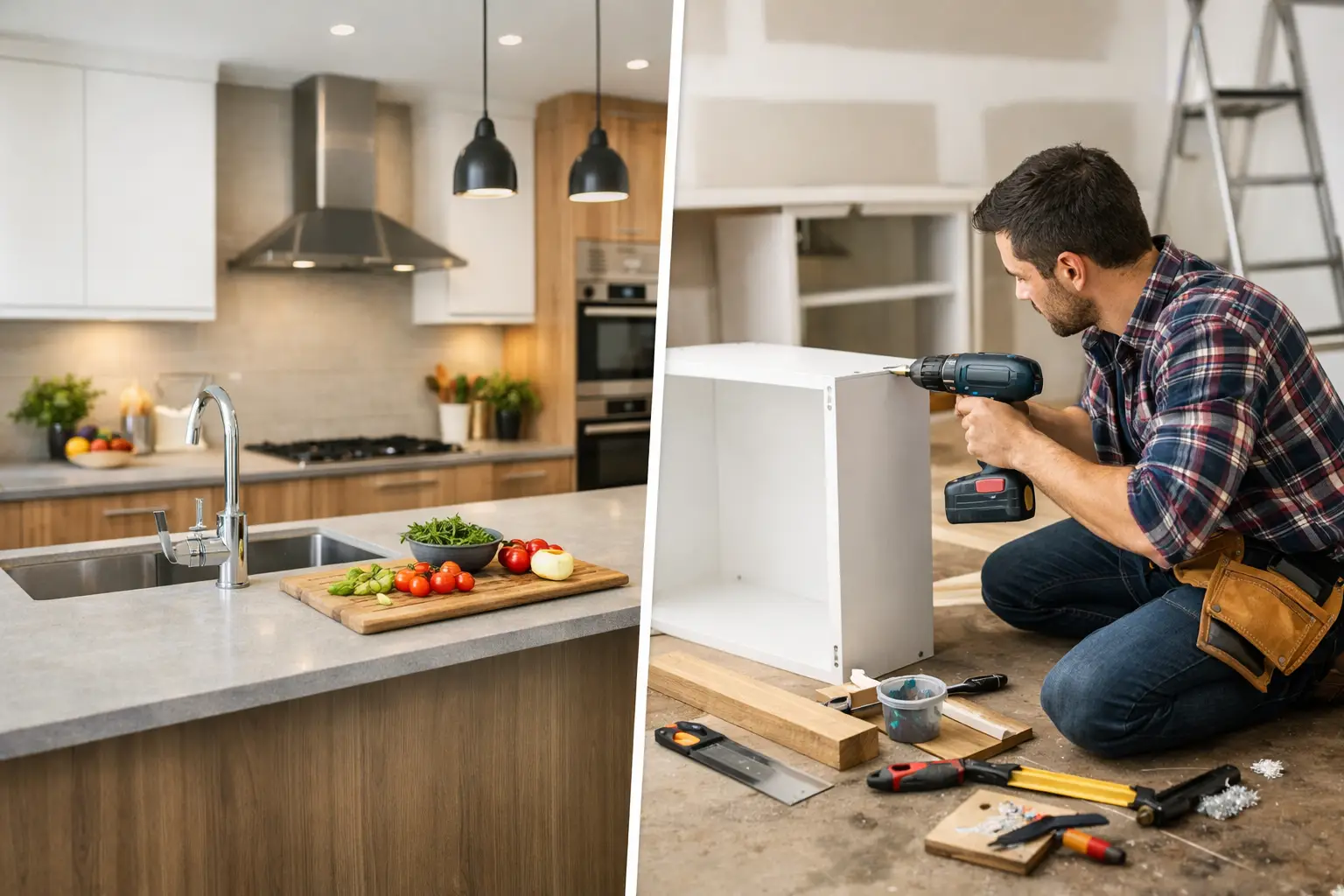
If your kitchen still works well but looks tired every time you make a cup of tea, the usual question is not whether you need a new room. It is whether a fitted kitchen or DIY approach will actually give you the result you want. For many homeowners, especially if the layout already suits daily life, the best answer sits somewhere between the two.
That is where a lot of kitchen projects go off track. People assume the choice is between spending heavily on a full refit or spending weekends wrestling with flat-pack units, paint and awkward hinges. In practice, there is a third option that often makes more sense – keeping the cabinets you have and updating the parts that make the biggest visual and practical difference.
Fitted kitchen or DIY – what do people usually mean?
When people say fitted kitchen, they often mean a complete replacement. Old units come out, new cabinets go in, plumbing and electrics may need moving, and the whole room is treated as a fresh installation. That can be the right route if your cabinets are damaged, the layout wastes space, or the kitchen simply no longer works for the way you live.
DIY tends to cover everything else. It might mean painting cupboard doors, changing handles, fitting new shelves, swapping a worktop or even building and installing parts yourself. The appeal is obvious. It looks cheaper on paper, gives you control, and can feel manageable if you are reasonably handy.
The trouble is that these are very broad categories. A full fitted kitchen is not always necessary, and DIY is not always as straightforward or economical as it first appears.
Start with the layout, not the doors
Before deciding anything, ask one simple question: does the current layout still work?
If your sink, hob, appliances and storage are in the right places, that matters more than many people realise. A kitchen that flows well is worth keeping. Replacing everything just because the doors look dated can turn into a much larger job than expected, with disruption, trades and extra costs quickly following.
On the other hand, if you are forever short of worktop space, struggling with awkward corners or dealing with cabinets that no longer open properly, then a more involved project may be justified. The key is to separate cosmetic problems from structural ones. Tired fascias, worn handles and old worktops can often be changed without disturbing the whole room.
The real cost question is not just the quote
Most people compare fitted kitchen and DIY on cost alone. That is understandable, but the cheapest quote is not always the cheapest outcome.
A DIY update can save money if the job is genuinely within your skill set and the kitchen units underneath are sound. Replacing handles, fitting new doors, changing end panels and updating a splashback can transform the room without the price tag of a full refit. If you are organised and realistic about your time, that can be excellent value.
But DIY becomes expensive when mistakes creep in. Measuring errors, poorly aligned doors, damaged finishes, uneven worktops and wasted materials all add up. So does the hidden cost of your own time, especially if the kitchen is out of action longer than planned.
A fitted kitchen usually costs more because it is a bigger job. You are paying for design, removal, installation and sometimes remedial work once the old kitchen comes out. Yet if your current kitchen needs substantial changes, trying to patch it together yourself can become false economy.
For many local homeowners, the sweet spot is a kitchen makeover rather than either extreme. Replacing doors, drawer fronts, worktops, handles, sink or tap can give the room a new lease of life at a sensible cost, while keeping the layout and cabinets that still serve you well.
Finish matters more in a kitchen than almost any other room
Kitchens get used hard. Doors are opened dozens of times a day, surfaces are wiped constantly, and steam, heat and knocks are part of normal life. That is why finish matters.
A DIY paint job can look fresh for a while, but it may not stand up well around handles, corners and edges unless it has been prepared properly and finished with the right products. The same goes for fitting doors or worktops. Small inaccuracies show up quickly in a kitchen because lines need to be straight, gaps even and fittings secure.
This is where many homeowners decide they want help, even if they are not looking for a full fitted kitchen. Professionally made replacement doors and correctly fitted finishing touches tend to give a cleaner, longer-lasting result. It is not about overcomplicating the job. It is about choosing where quality really counts.
DIY works best when the job is clearly defined
There is nothing wrong with taking on parts of your own kitchen update. In fact, some jobs suit DIY perfectly well.
Decorating walls, changing handles, adding storage accessories or fitting simple finishing details can all be sensible projects. If you are practical and patient, you may also be comfortable changing door fronts or panels, provided everything has been measured properly and the cabinets are still in good condition.
Where DIY becomes risky is when the project starts to touch plumbing, electrics, appliance fitting or worktops that need accurate cutting and joining. These are the areas where a small problem can become a costly one. A sink that is not sealed correctly, a hob that is not fitted safely or a worktop joint that lets in moisture will not stay a small issue for long.
So the better question is not, “Can I do this myself?” It is, “Which parts should I do myself, and which parts are better handled properly from the start?”
A fitted kitchen is not always the upgrade people think it is
A completely new kitchen sounds attractive because it promises a clean slate. Sometimes that is exactly what is needed. But there are trade-offs.
A full replacement usually means more mess, more time and more decisions. Once units are removed, extra jobs often appear. Plastering may need attention. Flooring may no longer match. Pipework and electrics may need adjusting. What looked like a straightforward kitchen swap can become a wider room renovation.
That is fine if you want a full transformation and have planned for it. It is less appealing if you mainly wanted the room to look fresher and work a bit better.
Keeping a solid existing kitchen carcass and improving the visible, worn or dated elements is often the more practical route. It preserves what still works and focuses your budget on the things you see and use every day.
Why seeing options in person helps
Kitchen decisions are harder online than people expect. Colours shift from screen to screen, finishes look flatter in photos, and it is difficult to judge how a handle, worktop or door style will sit together.
That is one reason a showroom visit is still useful, especially if you are weighing up fitted kitchen or DIY options and want a realistic sense of what can be achieved. Being able to compare samples, open doors, feel finishes and ask practical questions often saves money in the long run because you choose with more confidence.
For homeowners around St Neots, Little Paxton and nearby towns, that local, face-to-face advice can be the difference between making a rushed decision and finding an update that genuinely suits the room.
The middle ground often gives the best result
A lot of kitchens do not need ripping out, and they do not need a heroic DIY effort either. They need a sensible refresh.
New made-to-measure or standard size doors can change the look completely. Updated worktops can modernise the whole room. Replacing handles, sink, tap, plinths and panels helps tie everything together so it feels intentional rather than patched up. If an appliance is dated or impractical, changing that at the same time can improve everyday use without turning the project into a full refit.
This kind of approach suits homeowners who like the footprint of their kitchen and want it to feel cleaner, newer and more useful. It is practical, less disruptive and usually easier to budget for.
At Replacement Kitchen Doors To Size, that is often where the most satisfying projects begin – not with tearing everything out, but with looking carefully at what is worth keeping.
So, fitted kitchen or DIY?
If your kitchen layout is poor, the cabinets are failing or you want major structural change, a fitted kitchen may be the right answer. If the room is fundamentally sound and you are only tackling lighter cosmetic jobs, DIY may be enough.
But if you are somewhere in the middle, which is where most homeowners are, a targeted kitchen makeover often gives the best balance of cost, finish and disruption. You refresh the kitchen you already have, keep what still works, and improve the parts that no longer do.
That is usually the most sensible place to start. Before you commit to a full replacement or load up the toolbox, take a proper look at the kitchen in front of you. You may already have the bones of the room you want.