A Small Kitchen Makeover Example That Works
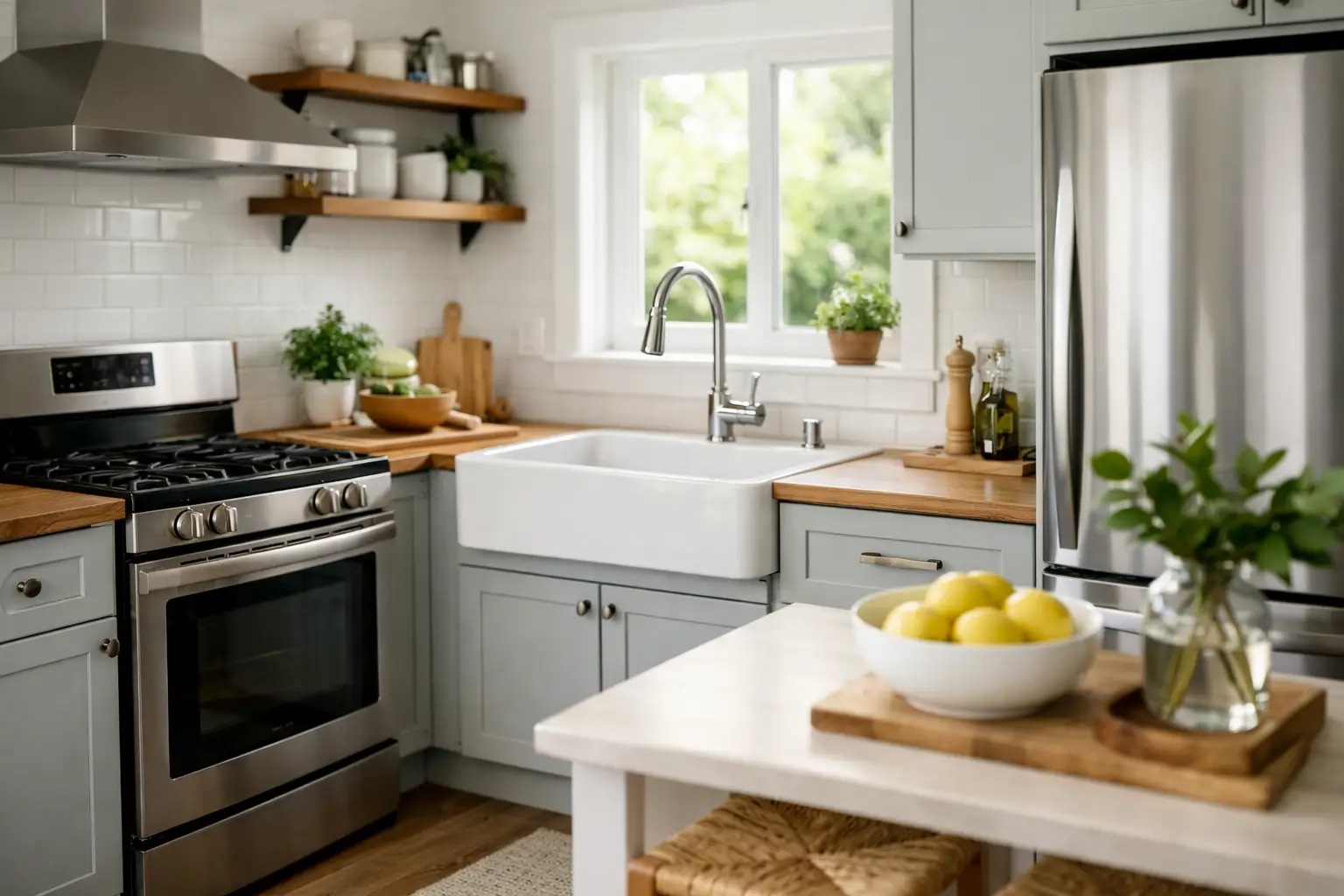
When a kitchen is small, every tired door, awkward corner and dated finish feels more obvious. That is why a good small kitchen makeover example matters – it shows what can change without ripping out units that still do their job. If you like your current layout but the room no longer feels fresh, a targeted update can make the kitchen easier to use and much nicer to look at.
A realistic small kitchen makeover example
Picture a typical compact kitchen in a home around St Neots or Huntingdon. The cabinets are structurally sound, but the maple-effect doors have yellowed a little over time, the handles feel old-fashioned, and the laminate worktop has seen better days. The sink is still serviceable, yet it makes the whole room look stuck in another decade.
The layout itself is not the problem. The oven is in the right place, storage is adequate, and moving plumbing or electrics would add cost without adding much benefit. In this sort of kitchen, a full replacement often solves issues the homeowner does not actually have. A makeover is usually the more sensible route.
In this example, the starting point is simple – keep the cabinet carcases, keep the basic arrangement, and improve the parts that shape how the room looks and works every day. That means replacement kitchen doors, new drawer fronts, updated handles, a fresh worktop, and a few finishing touches that bring everything together.
What changed in this kitchen
The biggest visual shift came from replacing the doors and drawer fronts. A lighter shaker-style door in a soft matt finish immediately made the room feel brighter and calmer. In a small kitchen, door style matters more than many people expect. Heavy detailing can make the space feel busier, while something cleaner often helps the room feel less cramped.
The handles were changed at the same time. This sounds minor, but old handles can date a kitchen more than the doors themselves. A simple brushed steel or black handle can sharpen the whole look, depending on the colour and finish chosen elsewhere.
The worktop was the next key decision. In a compact kitchen, too much pattern can crowd the room, but a plain surface can sometimes feel flat. In this example, a lightly veined worktop added interest without making the space feel smaller. That balance is worth getting right.
The sink and tap were also updated. Not because they had failed, but because they no longer matched the cleaner look of the new doors and worktop. A modern sink with a practical tap improved both appearance and day-to-day use, particularly around washing up and food preparation.
Walls, flooring and lighting were then considered as supporting elements rather than the main event. That is often the right order. There is little point repainting first if the new kitchen finishes are going to change the room’s colour balance.
Why this approach works in a small kitchen
Small kitchens do not have much spare space to hide poor choices. Every finish is noticed. Every surface has to earn its place. That is why keeping what works and changing what does not can be so effective.
Replacement doors are often the best-value starting point because they transform the visible face of the kitchen. If the cabinet units are still in good condition and the layout suits your routine, replacing everything can be unnecessary. A makeover lets you spend money where it makes the biggest difference.
There is also less disruption. A full refit can leave you without a working kitchen for longer and may involve flooring repairs, plastering, electrical changes or plumbing alterations that were not part of the original plan. By contrast, a refresh based on doors, worktops and finishing touches is usually more straightforward.
That said, it depends on the condition of the existing kitchen. If units are damaged, badly fitted or impractical, then keeping them may be a false economy. The best results come from being honest about what is worth saving.
Small design choices that made a big difference
In this small kitchen makeover example, the practical gains were just as important as the visual ones. The homeowner did not gain extra floor space, but the room felt better organised because the makeover was planned carefully.
A pale door colour helped bounce more light around the room. That is a common trick, but it works best when paired with enough contrast to stop the kitchen looking washed out. Here, the contrast came from the worktop and handles rather than dark wall units or bold flooring.
The choice of finish mattered too. A matt surface gave the kitchen a softer, more current feel, while also disguising fingerprints better than some high-gloss options. Gloss can work well in small spaces because it reflects light, but it is not always the easiest choice in a busy family kitchen. There is no single right answer – it comes down to how you use the room.
The worktop overhang and edging profile were kept simple. In a smaller room, chunky detailing can feel out of proportion. Cleaner lines usually help.
Storage was improved without moving any units. A couple of drawers were upgraded internally, and clutter was reduced by choosing better-organised inserts and making the most of awkward cupboards. This is the kind of practical improvement that often gets overlooked when people focus only on colours and styles.
What homeowners often get wrong
The most common mistake is assuming a small kitchen needs a full rip-out because it feels dated. Often, what feels wrong is the appearance rather than the layout. If your cabinets are sound and the kitchen works reasonably well, replacing doors, handles and worktops can change the room far more than expected.
Another mistake is choosing finishes in isolation. A door sample that looks lovely on its own may not suit your flooring, wall colour or natural light. Small kitchens are particularly sensitive to this because there is less space to balance competing finishes.
That is one reason visiting a showroom is so helpful. Seeing door styles, colours and worktop samples together makes decision-making easier. It is much simpler to compare a warm neutral against a cooler grey, or a woodgrain finish against a painted look, when the samples are in front of you rather than on a screen.
Some homeowners also try to make the room feel bigger by choosing everything in white. Sometimes that works, but sometimes it strips the kitchen of character. A better approach is usually to keep the scheme light and calm, then add texture or contrast in measured ways.
How to tell if your kitchen is a good candidate for a makeover
If you like the general layout, your cabinet units are in decent condition, and the room feels tired rather than truly worn out, a makeover is worth exploring. The same applies if your kitchen works well enough but looks older than the rest of the house.
You may also be a good candidate if you want a fresher style without the upheaval of a full renovation. Many households would rather avoid unnecessary building work, especially when the kitchen is used heavily every day.
On the other hand, if doors no longer fit properly because cabinets are damaged, or if the layout causes daily frustration, it may be time to think more broadly. A practical kitchen should not just look better – it should make life easier.
Seeing a small kitchen makeover example in person
Photos can be useful, but they rarely tell the whole story. Colour changes under different light. Textures are hard to judge on a phone. Door thickness, handle shape and worktop finish all make more sense when you can see and touch them.
For homeowners near Little Paxton, St Neots, Sandy, Biggleswade or Bedford, visiting a local showroom gives you a clearer idea of what is possible with the kitchen you already have. You can compare standard and made to measure options, look at combinations side by side, and talk through whether your existing units are likely to suit replacement doors and updated finishes.
That conversation often saves people from spending too much or changing more than they need to. Replacement Kitchen Doors To Size helps homeowners do exactly that – refresh what they have, choose practical improvements, and move forward with more confidence.
A small kitchen does not need grand gestures. Often, it just needs better choices, well put together, so the room feels brighter, neater and more enjoyable to use every day.