Kitchen Storage Solutions for Small Kitchens
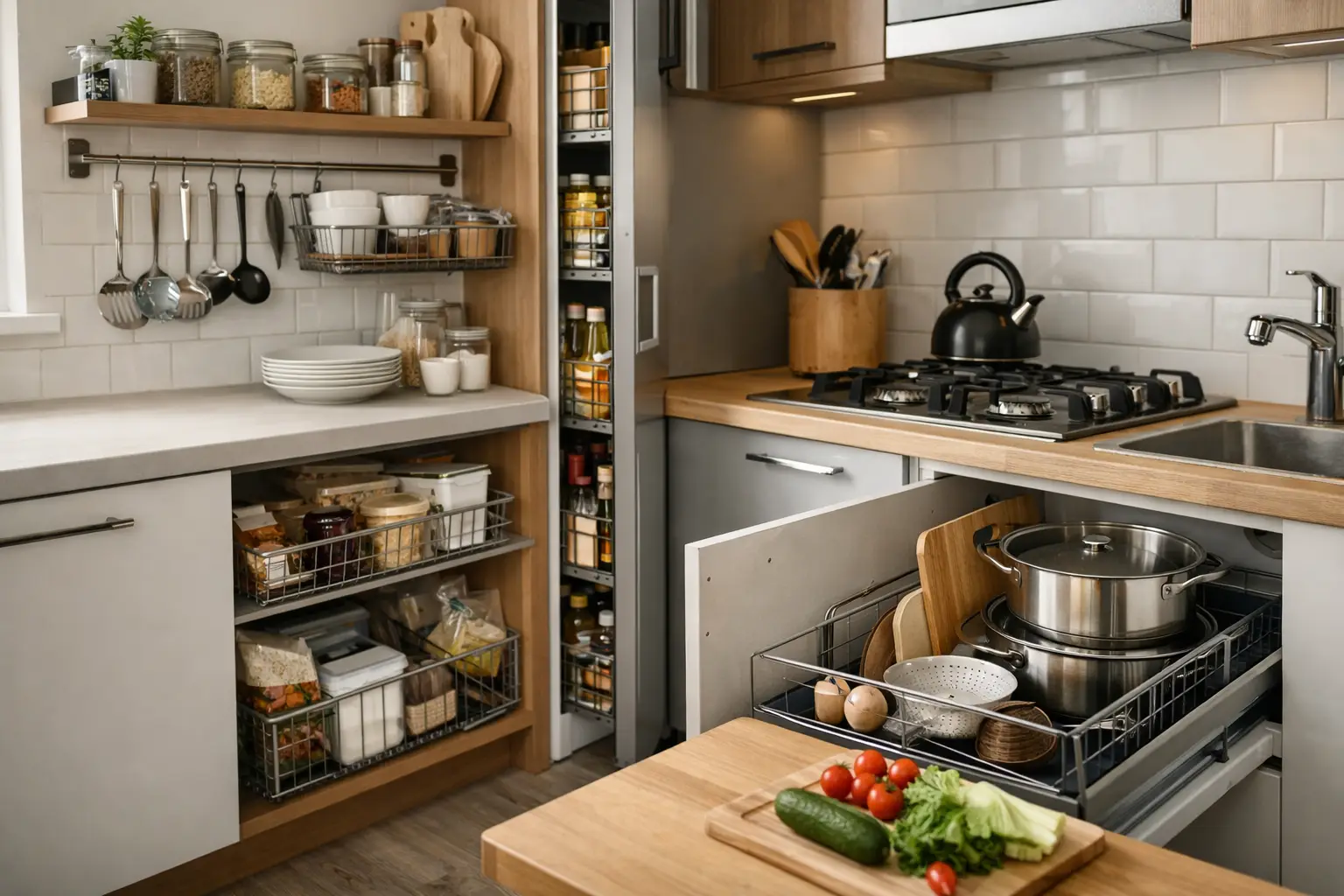
When a kitchen is short on space, the problem is rarely just size. It is usually a mix of awkward corners, hard-to-reach cupboards, crowded worktops and storage that does not quite suit the way the household actually cooks and lives. The best kitchen storage solutions for small kitchens solve those everyday frustrations, not just the square footage.
A small kitchen can work brilliantly, but only when every cabinet, drawer and surface has a clear purpose. That often means thinking beyond standard units and looking carefully at what is being stored, how often it is used and where it makes sense to keep it. A family that cooks from scratch every evening will need a very different layout from someone who wants a compact, easy-care kitchen for quick meals and entertaining.
What makes small kitchen storage work
Good storage is not about squeezing in as many cupboards as possible. In many smaller kitchens, too many wall units can make the room feel closed in, while deep cabinets without internal organisation often become dumping grounds for pans, baking trays and half-used packets.
The aim is to create storage that is easy to access and simple to keep tidy. That usually means making better use of full cabinet depth, choosing drawers where they will work harder than cupboards, and reducing the amount of visual clutter on show. It also means accepting a few trade-offs. Open shelving can make a compact kitchen feel lighter, for example, but it needs regular upkeep and suits some households better than others.
Kitchen storage solutions for small kitchens that genuinely save space
In most homes, the biggest gains come from the lower cabinets. Deep pan drawers are often far more practical than standard base cupboards because you can pull everything out and see it at once. For pots, pans, food containers and crockery, drawers tend to reduce wasted space and make daily use easier.
Corner storage is another area where a thoughtful design makes a real difference. Small kitchens often include difficult corners that end up underused. Pull-out corner mechanisms, swing-out shelves or carefully planned corner drawers can turn these awkward spots into useful storage for cookware or small appliances. The right choice depends on the cabinet size and the budget, but almost any well-designed corner solution is better than losing that space entirely.
Tall storage can also transform a compact layout. A slim larder unit, even in a narrow width, can hold a surprising amount of dry goods and cooking essentials while keeping everything organised in one place. This works especially well in kitchens where worktop space is limited, because it takes pressure off the base units and helps avoid overfilling wall cupboards.
Integrated internal storage details are often what make a small kitchen feel easy to live with. Pull-out bins, tray dividers, cutlery inserts and spice organisers do not sound dramatic, but they stop cabinets becoming chaotic. In a larger room, a bit of wasted space is less noticeable. In a small kitchen, it affects the whole room.
Making more of wall space without overcrowding the room
Wall storage has its place, but balance matters. If every wall is filled with cabinetry, a small kitchen can quickly feel boxed in. One of the most effective approaches is to mix closed storage with a little breathing space.
For some kitchens, a run of wall units on one side paired with open wall space or shelving on the other creates a better visual balance. Shelving can work well for everyday mugs, neatly stacked bowls or a few frequently used items, but it is best kept selective. If every inch of shelf space is packed, it can make the room look busier rather than bigger.
Using the area between worktop and wall units can also help. A rail, magnetic knife strip or compact hanging system can free up drawer space without taking over the room. These details are most useful when they support daily habits. If a utensil is used every day, keeping it accessible makes sense. If not, it may be better stored away.
Layout matters as much as storage
Some of the most effective kitchen storage solutions for small kitchens come from changing the layout rather than adding more units. A poorly planned kitchen can have plenty of cabinets and still feel impractical.
Appliance placement is a common example. If a fridge door blocks a drawer, or a dishwasher prevents access to a cupboard when open, the kitchen will feel more cramped than it needs to. Likewise, oversized appliances can dominate a compact space. Choosing integrated or slimmer appliances can release valuable room for cabinetry and improve movement around the kitchen.
Handleless or streamlined cabinetry can help visually as well. It does not increase storage capacity on its own, but in a compact room it can create a cleaner look with fewer interruptions, which often makes the space feel calmer and more generous.
This is where bespoke planning can be worth considering. Standard kitchen ranges suit many homes, but smaller or unusually shaped rooms often benefit from cabinets sized and positioned around the property itself. A few extra centimetres gained through careful design can make the difference between a kitchen that feels compromised and one that works smoothly every day.
Storage ideas for the items that usually cause clutter
Most small kitchens are not overwhelmed by everything equally. They are usually overwhelmed by a few problem categories: pans, food storage containers, small appliances, recycling, cleaning products and bulk groceries.
Pans and lids are much easier to manage in deep drawers with dividers than in stacked cupboards. Food containers need a dedicated drawer or shelf, otherwise they spread everywhere. Small appliances are best stored based on frequency of use. The kettle and toaster may deserve worktop space. The slow cooker or stand mixer probably does not, unless it is used constantly.
Recycling and refuse are often overlooked in the early design stages, then become an annoyance later. Built-in bin systems can make a small kitchen feel more ordered and hygienic, particularly in family homes where everyday use is heavy. Cleaning products also need proper consideration, ideally in one easily accessible area rather than tucked into several random cupboards.
Bulk buying is another factor. A household that shops weekly and stores a lot of dry goods will need more pantry-style space than one that shops little and often. There is no single right answer here. The best storage plan reflects the way the home runs.
When small kitchens need a full redesign
Sometimes the issue is not storage accessories or better organisation. It is that the kitchen was never designed properly in the first place. In older homes around St Neots, Huntingdon and the surrounding villages, it is common to see kitchens with awkward alcoves, limited worktop space or dated layouts that no longer suit modern family life.
A full redesign can allow storage to be built into the room more intelligently from the start. That might mean replacing shelves with drawers, introducing a tall housing bank, reworking a corner, or choosing cabinetry that reaches the ceiling to make use of vertical space. It may also involve better lighting, improved appliance placement and worktops that give a little more preparation area without crowding circulation space.
This is often where homeowners notice the biggest change. Not because the room becomes physically larger, but because it stops fighting them. A well-designed kitchen should make everyday routines simpler, from unpacking the shopping to making breakfast to clearing up at the end of the day.
Choosing storage that still looks good
Practicality matters most in a small kitchen, but appearance should not be treated as separate. The most successful kitchens balance both. Storage should help the room feel cleaner, calmer and more considered.
That might mean using matching jars or internal organisers to reduce visual noise, choosing lighter cabinet finishes to keep the room feeling open, or selecting quartz worktops that are durable and easy to maintain. Materials and finishes will not solve a poor layout, but they do shape how spacious and usable the room feels over time.
If you are planning changes, it helps to look at storage and design together rather than as two separate decisions. A kitchen should not simply hold everything. It should support the way you live, and do it without making the room feel crowded.
For homeowners who are tired of overflowing cupboards and cluttered worktops, the answer is usually not more stuff but smarter planning. The right storage, in the right place, can make a small kitchen feel far more capable than its footprint suggests. If a room is going to work hard every day, it is worth making sure every inch earns its place.