How to Plan a DIY Kitchen Properly
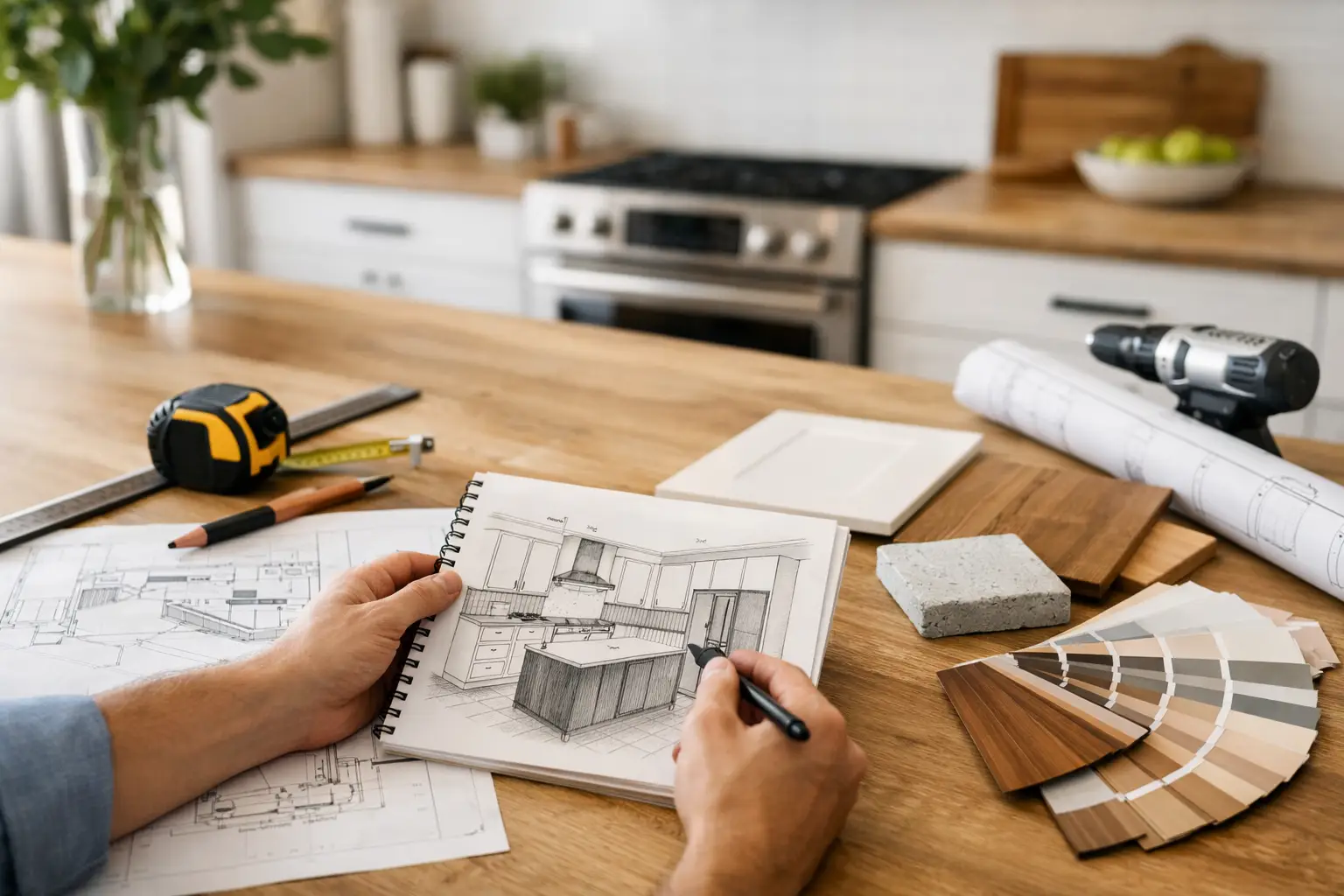
A DIY kitchen can save money, give you more control and let you improve your home in stages – but it also leaves less room for guesswork. If you are working out how to plan a DIY kitchen, the best place to start is not with door colours or tap styles. It is with how the room needs to work on an ordinary Tuesday evening, when someone is cooking, someone else is making tea and the washing up is piling up.
That practical starting point makes the rest of the decisions much easier. A kitchen that looks good in a brochure can still be frustrating to use if the storage is awkward, the worktop space is too tight or the appliance layout does not suit the way your household lives.
How to plan a DIY kitchen from the layout up
Before you choose units, measure the room properly. That means wall lengths, ceiling height, window positions, door swings, boiler boxing, pipework, radiators and any uneven corners. In older homes around Cambridgeshire and Bedfordshire, very few rooms are perfectly square, so small discrepancies matter more than people expect.
It is worth sketching the room out to scale, even if it is only on graph paper. Once you can see the available space clearly, you can start placing the main working areas – sink, hob and fridge – in a way that feels natural. The classic working triangle still has value, but it should not be treated as a rule that overrides common sense. In a busy family kitchen, generous prep space between the sink and hob may matter more than a textbook triangle.
Think carefully about circulation too. If a dishwasher door is open, can anyone still walk past? If the fridge is in use, does it block the route into the room? These are the details that separate a kitchen that merely fits from one that feels easy to live with.
Start with function, then style
One of the most common DIY kitchen mistakes is choosing the look first and trying to force the room around it. Handleless doors, statement worktops and feature lighting all have their place, but they should support the layout rather than distract from it.
A good plan begins with questions such as: how much worktop do you genuinely need, where do you unpack the food shop, do you need seating, and is this a kitchen used by one cook or several people at once? If you bake often, you may want uninterrupted prep space. If storage is the daily frustration, deeper drawers may be more useful than extra cupboards.
Style choices become much easier once those priorities are clear. A simple modern door can work beautifully in a compact space, while a more detailed range may suit a larger room with enough visual breathing room. The right answer depends on the size of the kitchen, the age of the property and how much upkeep you are happy to take on.
Set a realistic budget before you order anything
DIY often sounds cheaper in principle than it turns out in practice. Cabinets and doors are only part of the cost. You also need to account for worktops, appliances, sink, tap, flooring, lighting, plastering, tiling, waste removal and all the smaller items that add up quickly, such as end panels, plinths, fillers and fixings.
Then there is the labour you may still need, even if you are fitting part of the kitchen yourself. Petrol work, electrical work and some plumbing are usually best left to qualified tradespeople. If the room needs levelling, rewiring or plaster repairs, your budget needs to cover that from the outset.
It helps to divide spending into three groups: essentials, worthwhile upgrades and nice-to-haves. Essentials are the items you cannot do without for the kitchen to function properly. Worthwhile upgrades are things that improve durability or day-to-day use, such as better drawer runners or more practical storage. Nice-to-haves are cosmetic extras that can be added later if needed.
That approach keeps the project grounded. It also helps avoid overspending early on and then cutting corners on the parts of the kitchen you touch every day.
Storage is where good planning pays off
Most people asking how to plan a DIY kitchen are really trying to solve the same problem: how to make the room work better. Storage usually sits at the centre of that.
Rather than counting cupboards, think in terms of what needs to be stored and where it is used. Pans belong near the hob. Cutlery and plates should be close to the dishwasher if possible. Breakfast items are easier to manage when they are grouped together instead of spread across three cabinets.
Drawers often outperform standard base units because they bring the contents out to you. Corner storage can be useful, but it needs careful thought. Some corner solutions look clever on paper yet offer less practical space than a straightforward cabinet elsewhere.
Wall units can increase storage, but in a smaller kitchen they can also make the room feel heavy. Open shelving may look attractive, though it tends to demand more tidiness than many households can realistically maintain. There is no single best answer here – only the option that suits your routine.
Plan around the awkward items
Tall cereal boxes, recycling bins, cleaning products, baking trays and small appliances are the items that often derail a neat plan. If you do not give them a proper home at the design stage, they end up cluttering worktops later.
This is where bespoke thinking matters. Even in a DIY kitchen, careful planning around real household items can make the finished space feel far more tailored. A narrow pull-out by the hob, a dedicated bin cupboard or a sensible larder arrangement can improve the room more than a purely decorative upgrade.
Appliances, services and fitting constraints
Appliance choices affect the whole plan, not just the shopping list. An American-style fridge freezer, a wider range cooker or a built-under wine cooler all have implications for ventilation, cabinet sizes and circulation space.
Check dimensions early and always allow for service gaps where needed. It is also important to confirm where existing plumbing, waste and electrics are located. Moving services is possible, but it can increase the cost and complexity of the project quite quickly.
If you are replacing a kitchen in roughly the same layout, you may be able to keep those changes to a minimum. If you are redesigning the room more substantially, build in enough time for trades before the kitchen arrives. Flat-pack units sitting in a hallway while walls are being patched is not an efficient way to run a project.
Delivery and access deserve some thought as well. Measure doorways, check parking arrangements and make sure there is a dry space to store units before fitting begins. These practical details are easy to overlook and inconvenient to solve at the last minute.
Decide honestly what you will do yourself
A DIY kitchen does not have to mean doing every part alone. In fact, the most successful projects are often the ones where homeowners are realistic about their own skills and time.
You might be comfortable assembling cabinets, fitting handles and decorating, but less confident when it comes to templating worktops or connecting appliances. That is perfectly sensible. There is a big difference between saving money wisely and creating avoidable problems.
Poor fitting can spoil even a high-quality kitchen. Crooked runs, badly scribed panels and rushed finishing details tend to stand out every day afterwards. If you are unsure, getting expert help for the technical or visible parts is often money well spent. Some homeowners prefer a hybrid approach, supplying the kitchen themselves and using professional support where it matters most. For many, that gives the best balance of control, value and peace of mind.
Give yourself more time than you think you need
Kitchen projects nearly always take longer than expected. A missing filler panel, a delayed appliance or an uneven floor can slow things down. If this is your main kitchen, plan for disruption properly.
Set up a temporary kettle, microwave and food prep area elsewhere in the house if you can. Order in the right sequence. Confirm lead times before booking trades. The smoother projects are not the ones with no hiccups – they are the ones with enough contingency to absorb them.
Where expert advice still helps on a DIY project
Even if you intend to manage most of the work yourself, a proper design conversation can save a lot of expensive guesswork. This is especially true if the room is awkward, the storage needs are high or you are trying to make a compact kitchen feel larger and more efficient.
A local specialist can often spot issues before they become costly, from filler allowances and appliance clearances to drawer conflicts and wasted corners. At The Kitchen Magician, that practical side of kitchen planning matters just as much as the finish because the goal is not simply to supply units. It is to help create a kitchen that works well for years.
When you plan carefully, a DIY kitchen does not have to feel like a compromise. It can be a smart way to create a space that suits your home, your budget and your everyday routine – provided the decisions are driven by function first and fashion second.
If you are at the early stage, slow down just enough to get the plan right. A kitchen is far easier to fit than it is to fix afterwards.