Are DIY Kitchens Worth It for Your Home?
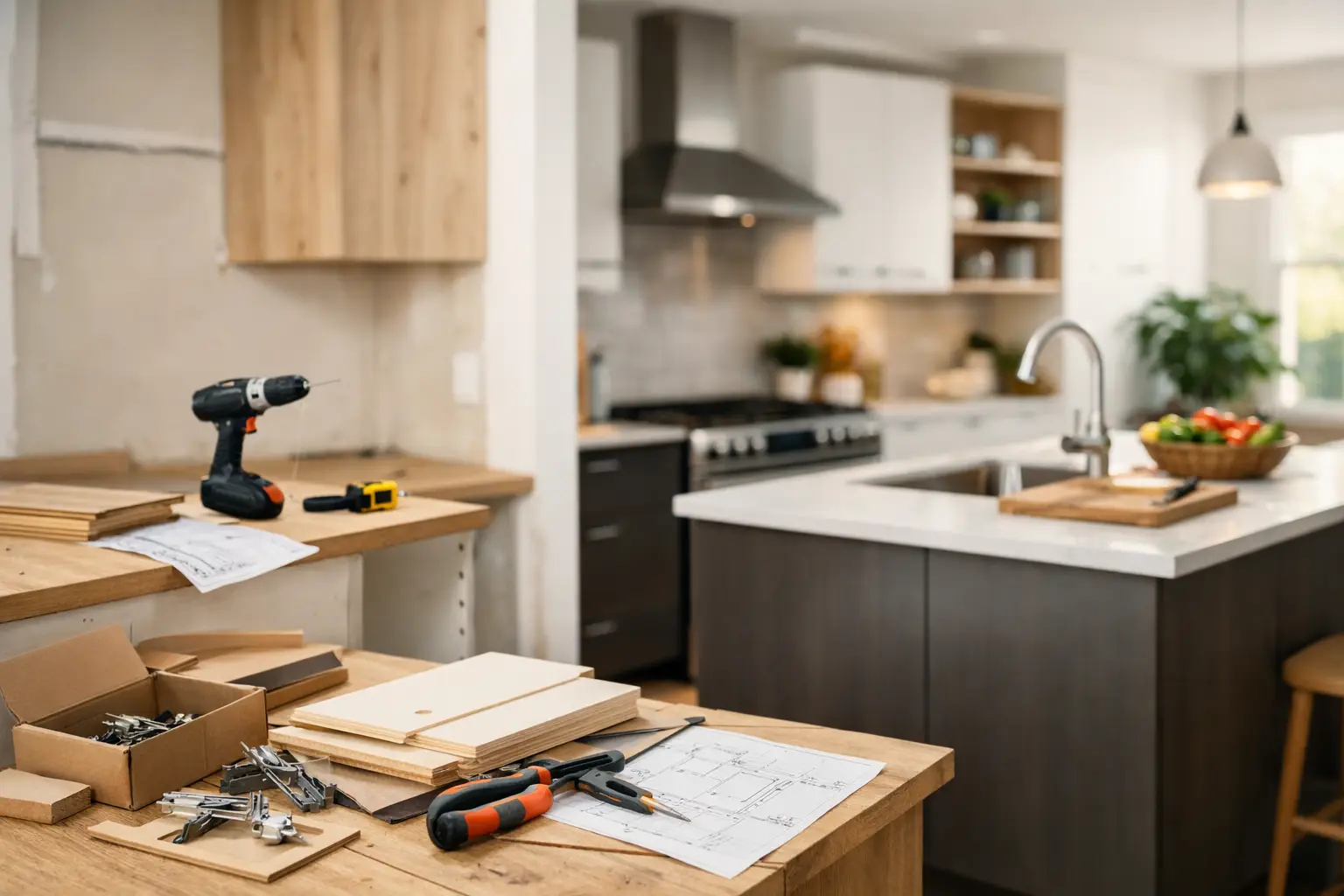
A flat-pack cabinet can look like a bargain until it arrives in six boxes, the wall turns out not to be straight, and the plumbing sits exactly where your new drawers need to go. That is usually the point when homeowners start asking, are DIY kitchens worth it? The honest answer is that they can be – but only when the kitchen, the budget and the person managing the job are a good match.
For some households, a DIY kitchen is a sensible way to stretch a renovation budget and still achieve a smart, functional result. For others, the savings disappear quickly once fitting problems, delays and replacement parts start stacking up. The real question is not simply whether a DIY kitchen costs less on paper. It is whether it gives you the right result for how you live, cook and use the space every day.
Are DIY kitchens worth it when you look at the full cost?
At first glance, DIY kitchens often seem far cheaper than a fully fitted option. You can compare cabinet prices online, choose only the units you need and, in some cases, fit parts of it yourself. If you are updating a straightforward room and keeping the same layout, that can work well.
The difficulty is that kitchen budgets are rarely made up of cabinets alone. Worktops, appliances, taps, sinks, splashbacks, flooring, lighting and labour all have to be factored in. Then there are the less obvious costs – delivery charges, tools, fixings, waste removal and the time needed to coordinate trades.
A DIY kitchen can still represent good value, but only if you are pricing the whole project honestly. We often find that homeowners underestimate the cost of making a budget kitchen fit a real-life room. Walls are uneven, floors slope, boiler housings need thought, and storage needs change once you start planning properly. Those details matter because they affect how the kitchen works long after the boxes have been unpacked.
Where DIY kitchens make the most sense
DIY kitchens tend to suit certain projects better than others. If your room is a standard shape, the plumbing and electrics are staying in place, and you are happy with a more modular design, the process is usually more straightforward. They can also be a practical choice if you are confident managing trades or doing some of the preparation work yourself.
They are often a good fit for utility rooms, rental properties, annexes or secondary spaces where the priority is tidy, durable function rather than a heavily tailored finish. In these settings, a ready-to-assemble kitchen can provide a clean new look without the cost of a fully bespoke design route.
There is also a middle ground that many people overlook. You do not have to choose between doing absolutely everything yourself and handing over the entire project. Some homeowners prefer to source a DIY kitchen but ask for support with planning, measuring, worktops or installation. That can be a very sensible approach if you want cost control without taking all the risk on your own shoulders.
When a DIY kitchen stops being good value
The trouble starts when the room needs more thought than the cabinetry allows for. Older homes around St Neots, Huntingdon and nearby villages often come with awkward corners, uneven walls, chimney breasts, boxed-in pipework or limited natural light. A standard kitchen range can be made to work in those spaces, but getting a clean finish usually takes careful design and skilled fitting.
This is where cheap can become expensive. Fillers get wider, storage gets compromised and appliances do not always sit as neatly as expected. If you have to reorder damaged doors, replace incorrect parts or pay trades to rework something that was planned poorly, any early savings can disappear quickly.
There is also the cost of inconvenience. A kitchen is not a spare room you can ignore for a few months. If you are managing family life, school runs and work while trying to chase deliveries and coordinate plumbers, fitters and electricians, delays have a genuine impact. For many households, peace of mind is part of the value.
Design is where the biggest difference shows
A DIY kitchen can give you units and doors, but it does not always give you a kitchen that has been designed around your routine. That distinction matters more than many people realise.
Good kitchen design is not just about making everything fit on a plan. It is about deciding where prep space is needed, how far drawers open, whether the dishwasher blocks access, and if there is enough storage near the hob for the way you actually cook. It is about bin placement, lighting, corner access and whether tall housing makes the room feel cramped.
This is why two kitchens with similar price tags can feel completely different in daily use. One may look smart in a brochure but prove frustrating every morning. The other may make the room easier to move around, easier to keep tidy and far more enjoyable to use. That is often where expert guidance earns its keep.
Are DIY kitchens worth it for quality?
Quality varies widely. Some DIY kitchens are perfectly solid and represent strong value for money. Others rely on thinner materials, basic hinges and finishes that do not stand up well to years of steam, spills and constant opening and closing.
The key is to look beyond the headline price. Check cabinet construction, drawer runners, hinge quality, edging, carcass thickness and the finish on painted or wrapped doors. A kitchen has to cope with heavy daily use, especially in a family home. What seems acceptable in a showroom or online can feel very different after two years of real wear.
Worktops are another important point. A lower-cost cabinet range paired with a durable quartz worktop can still create a high-quality overall result, but only if everything is measured and fitted correctly. If the finish around joints, cut-outs and edges is poor, the kitchen will never feel quite right, no matter how attractive the materials looked at the start.
The hidden skill in fitting a kitchen properly
There is a reason kitchen fitting is a specialist trade. Cabinets need to be level even when floors are not. Appliance housings need precision. Worktops, end panels, cornice details, plumbing connections and electrical placement all need to line up properly.
Even homeowners who are handy around the house can find kitchens surprisingly demanding. A mistake is rarely isolated. If one base unit is out, the worktop can be affected. If the worktop shifts, the sink cut-out changes. If the plumbing then needs moving, your timescale and budget both move with it.
That does not mean DIY fitting is always the wrong choice. Some people have the experience and patience to do it well. But if you want a polished finish and a kitchen that feels built for the room rather than squeezed into it, installation quality plays a huge part.
A better way to decide
If you are weighing up your options, start with the room rather than the brochure. Ask yourself how complex the space is, whether the layout needs improving, how much disruption you can realistically handle and how confident you feel managing the process.
Then think about what matters most. If your priority is keeping initial spend as low as possible and the room is simple, a DIY kitchen may well be worth it. If your priority is making the best use of the space, improving storage, achieving a more tailored finish and avoiding expensive mistakes, extra design and fitting support usually pays back in the end.
This is often where local specialist advice is most useful. A company such as The Kitchen Magician can help homeowners decide whether a full design and installation service is the right route, or whether selected support around planning, supply or fitting would make a DIY kitchen a more successful investment.
So, are DIY kitchens worth it?
They are worth it for the right project, with the right expectations. They can save money, offer flexibility and work very well in straightforward spaces. But they are not automatically the cheaper or smarter option once you account for design, fitting, quality and the reality of living through the project.
A kitchen is one of the hardest-working rooms in the house. If you are investing in it, it makes sense to look past the ticket price and think about value in everyday terms – storage that works, a layout that flows, materials that last and a finish that still looks good long after installation day. That is usually the clearest way to decide what is truly worth it.